
Some weeks, the science is in the lab. Last week, it was on the conference floor in Adelaide, where OMF Australia sponsored Converge 2026, the Australian POTS Foundation’s annual conference.
The Foundation does exceptional work within a community we share. Many people living with ME/CFS and Long COVID also live with POTS, MCAS, EDS and other complex chronic conditions, and Converge creates an important opportunity to share emerging research, clinical insights and lived experience across these overlapping communities.
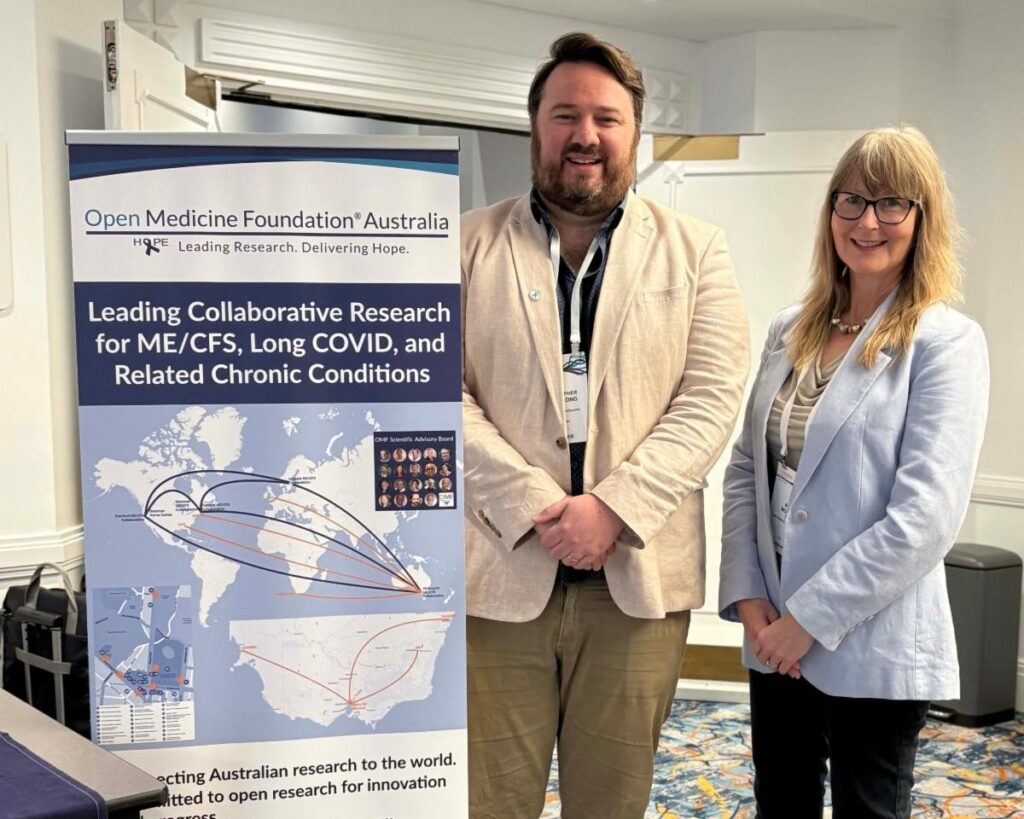
Throughout the conference, the OMF Australia team connected with patients, carers, clinicians and researchers from across the country. The conversations reflected both the scale of unmet need and the growing optimism that better answers are possible as the science advances.
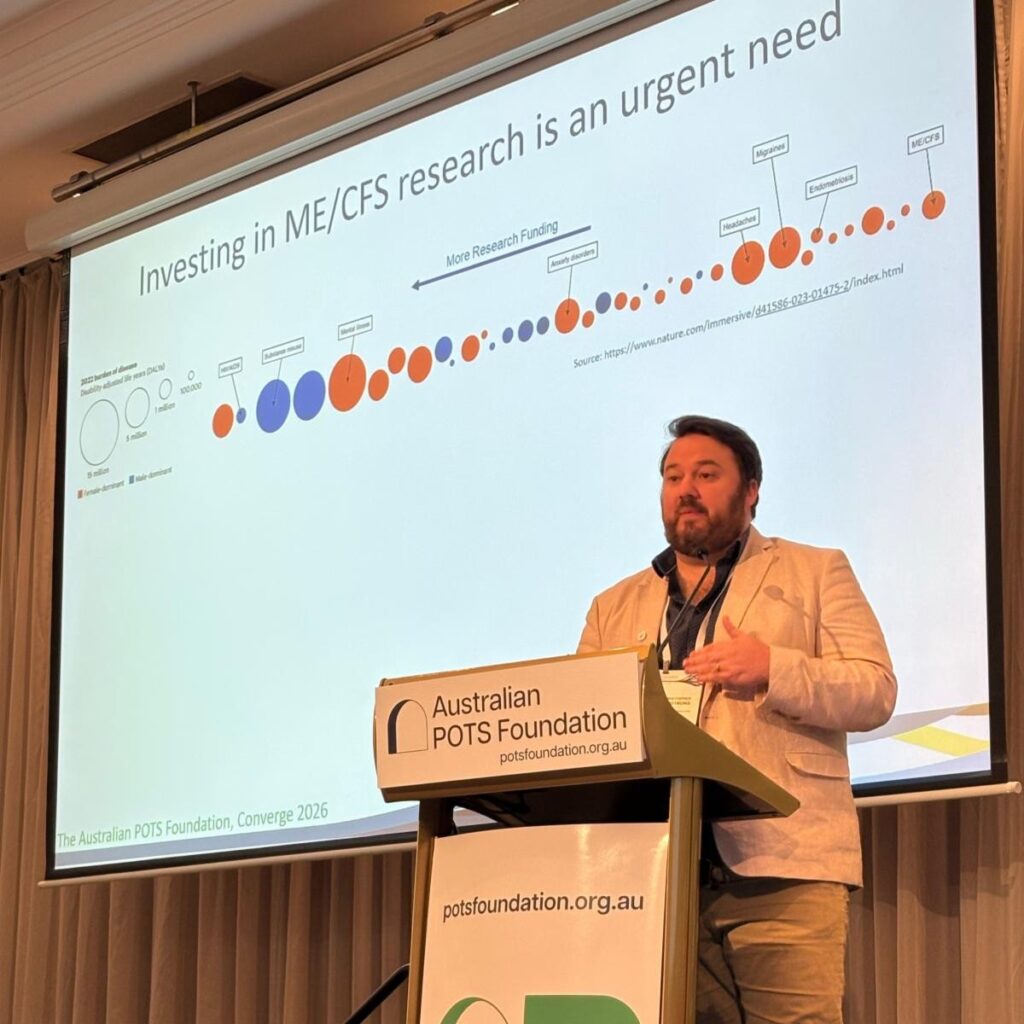
A highlight of the conference was Dr Chris Armstrong’s community presentation on innovation in ME/CFS and Long COVID research and the technologies helping drive the field forward.
Drawing on examples from genetics, neuroimaging, endocrine research and artificial intelligence, Chris explored how researchers at the Melbourne ME/CFS Collaboration are beginning to uncover the biological mechanisms underlying these conditions. He also discussed how advances in AI and data science may help researchers make sense of increasingly large and complex datasets, accelerating the path towards precision medicine approaches tailored to individual patients.
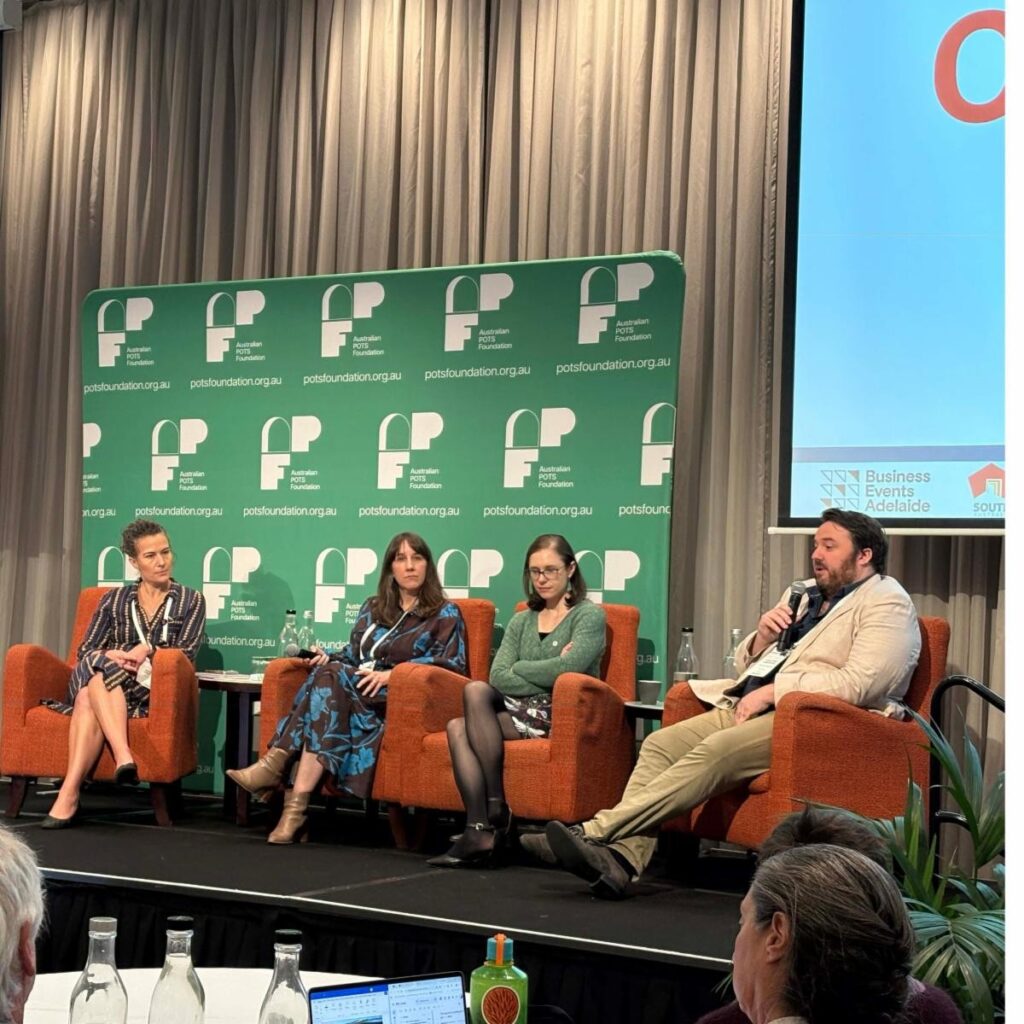
Chris also joined a panel hosted by Tracey Spicer alongside Drs Michelle Scoular, Celine Gallagher and Kate Anderson to discuss strengthening Australian research across these conditions. A key theme was the importance of broadening access to research so that people who are too unwell, or unable to travel to major research centres, can still participate.
For patients and families, both discussions offered a glimpse of what becomes possible when scientific momentum is matched by sustained investment.
On Thursday’s clinician day, Dr David Fineberg shared his approach to caring for people with ME/CFS and Long COVID, drawing on findings from TREAT-ME, a patient-reported survey examining the outcomes of a wide range of pharmacological and non-pharmacological interventions.
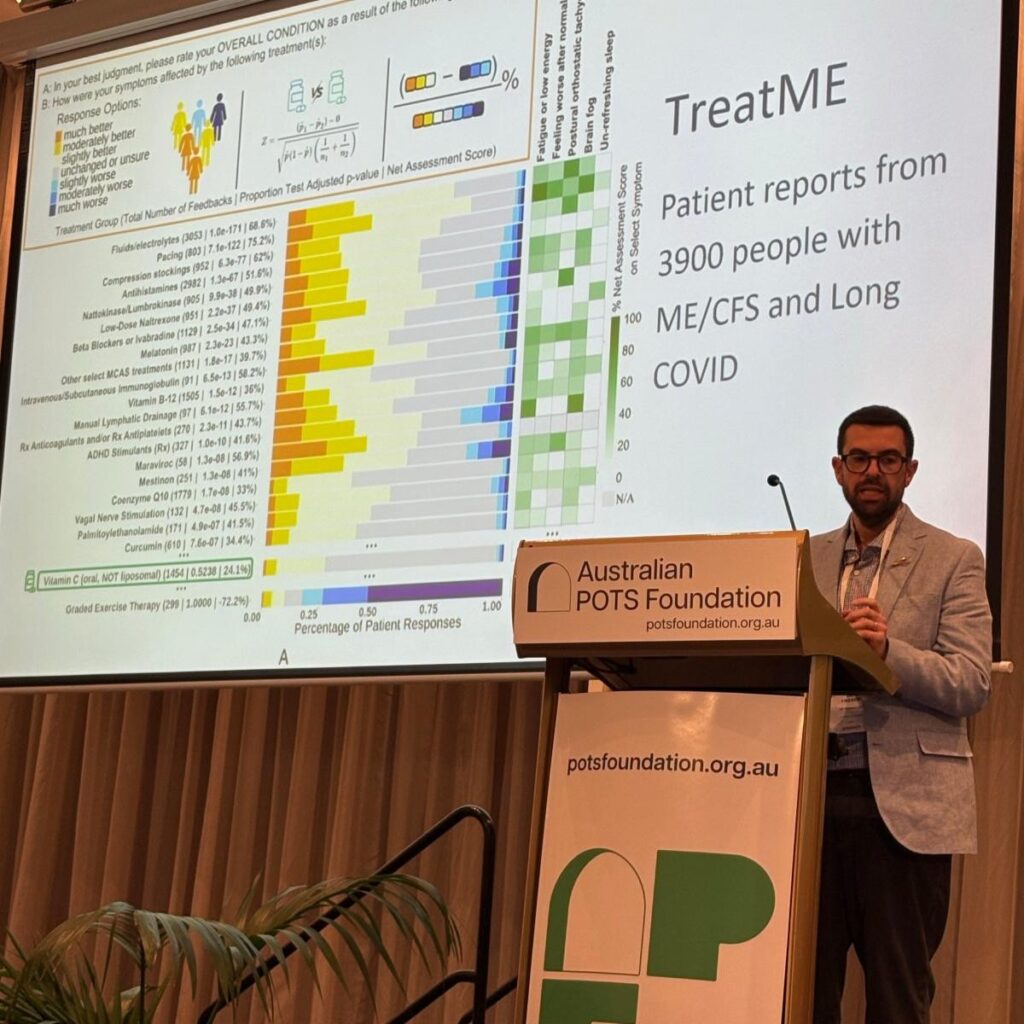
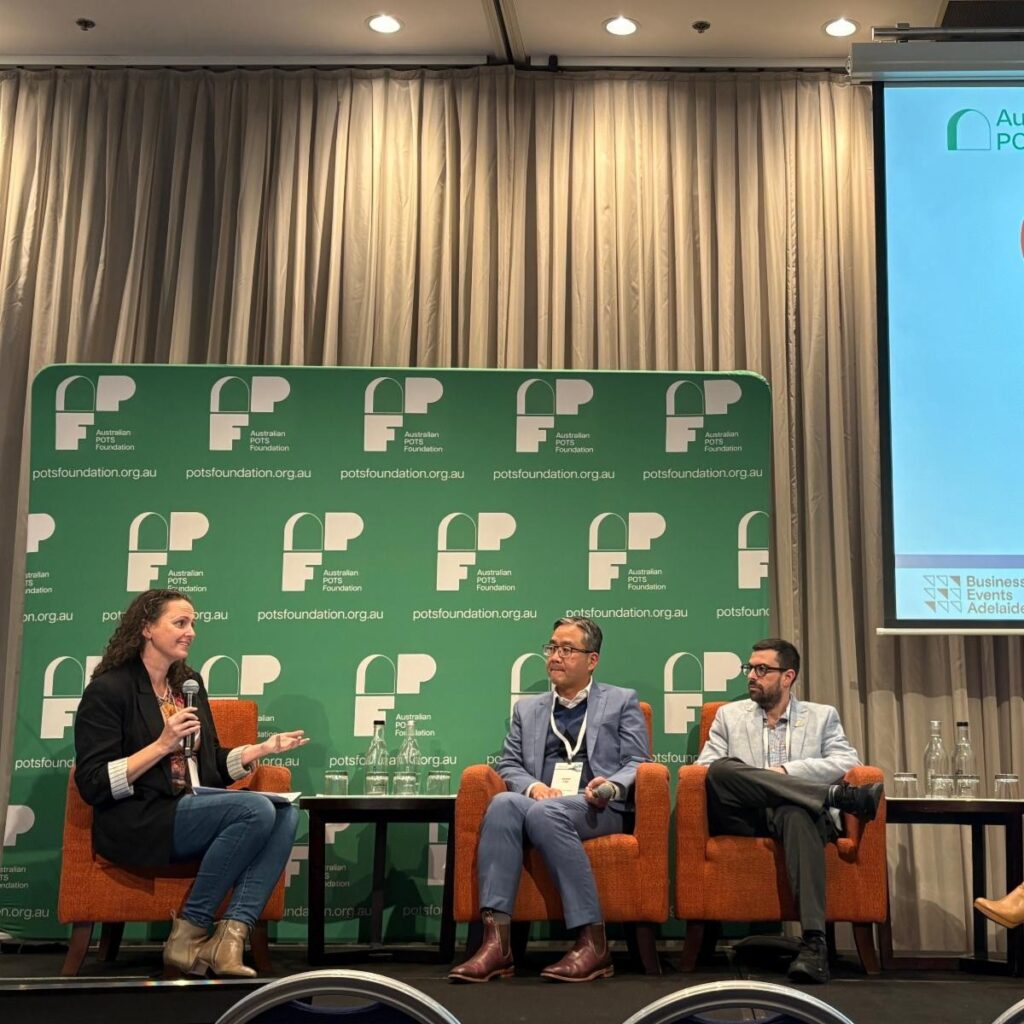
David also joined Drs Alexis Cutchins, Daniel Lau and Emma Tippett for a panel discussion exploring how clinicians can better recognise and manage overlapping conditions such as ME/CFS, POTS and Long COVID in practice.
As both a clinical partner of the Melbourne ME/CFS Collaboration and a PhD candidate in Chris’s laboratory, David helps bridge the gap between research and patient care.
Across both clinician and community sessions, a common theme emerged: momentum.
From patient-reported outcomes research to advances in genetics, neuroimaging and AI, the field is generating knowledge at a scale that was difficult to imagine only a few years ago. Increasingly, that knowledge is being shared with clinicians, translated into practice and used to guide the next generation of research.
This week in Adelaide was a powerful reminder that progress is happening, and that every member of the OMF Australia community is helping make it possible.
Thank you for being part of that journey.