Studying ME/CFS Pathogenesis via Cerebrospinal Fluid
The goal of this research is to reveal more information about the role of immunology and neuroinflammation in ME/CFS, and the underlying mechanisms of related pathogenesis that takes place.

Open Medicine Foundation Australia Ltd (OMFAL) is a regional branch entity of Open Medicine Foundation, and is part of the largest, concerted worldwide nonprofit effort to diagnose, treat and find a cure for ME/CFS.
It was established for the purpose of promoting and funding research into multi-system chronic complex diseases, and supports the Melbourne ME/CFS Collaboration and a growing network of exceptional researchers in Australia.

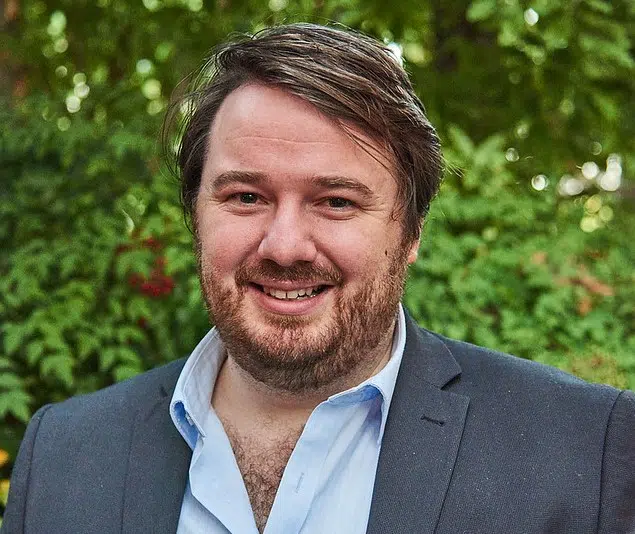
Established in 2020, the Melbourne ME/CFS Collaboration is directed by Christopher W. Armstrong, PhD.
“We are tremendously grateful for the generous support from Emerge Australia, our Australian partner. Emerge Australia is a national organisation providing information, support, and advocacy for people with ME/CFS — giving hope and help to more than 250,000 Australians living with the disease,”
Linda Tannenbaum, OMF Founder & CEO/President

The Melbourne ME/CFS Collaboration seeks to characterise the unifying biological pathways of ME/CFS that relate to the shared disease experience between patients while also understanding each patient’s unique biology that creates variation in disease experience and severity.
Chris Armstrong, PhD, was OMF’s Science Liaison and a Visiting Scholar at Stanford. He completed his PhD in Biochemistry at the University of Melbourne, and has been involved with researching ME/CFS for over a decade.
Dr. Armstrong is most well known for his research using metabolomics to observe biochemical alterations in ME/CFS patients. He began his work in this field at the University of Melbourne, beginning a PhD project to apply metabolomics to study (ME/CFS) and published his first metabolomics study on blood and urine in 2015.
Since then, Chris has set up collaborative efforts to apply metabolomics to immunological experiments on ME/CFS, observing how metabolism may relate to immune cell function. He has also focused on longitudinal research in ME/CFS while looking to extend metabolic capabilities across the field of ME/CFS to help collate different patient groups.

The goal of this research is to reveal more information about the role of immunology and neuroinflammation in ME/CFS, and the underlying mechanisms of related pathogenesis that takes place.
The purpose of this study is to facilitate early detection of ME/CFS in people with Long COVID and better understand disease progression.
The study aims to explore the structural, neuro-vascular, and biochemical differences in the brains of individuals with ME/CFS, Long COVID, and POTS to elucidate the underlying pathology and identify potential targets for effective treatment strategies.
The study aims to deeply characterise patients before, during and after treatments are trialled through their GP. Producing large scale data in combination with treatment outcome will be used to produce a predictive algorithm to improve the connection of patients to appropriate treatment options sooner.
The study aims to investigate how hormone fluctuations in individuals with ME/CFS and Long COVID, compared to healthy controls, impact metabolism and immune pathways by measuring hormones, metabolites, and inflammation markers in biofluid samples.
The study aims to investigate the effects of supine vs upright exercise on cerebral blood flow, blood pressure, heart rate, and the presence of autoimmune antibodies in ME/CFS patients with orthostatic intolerance, compared to controls, to understand the underlying mechanisms and differences in symptom severity and post-exertional malaise.
The study aims to compare biological markers during mild symptoms and flare/PEM events in individuals with ME/CFS, alongside PTLDS and Long COVID patients, using finger-prick blood samples and continuous data from wearable sensors to understand symptom variability.
The study aims to utilise the Australian ME/CFS biobank for metabolomics analyses and other assays to identify potential biomarkers for Myalgic Encephalomyelitis/Chronic Fatigue Syndrome, contributing to a comprehensive dataset for large-scale analysis.
Temporally Resolved Omics Tracking of ME/CFS (TROT-ME) Study AIM This study seeks to understand the biological mechanisms driving the symptomatology of Myalgic Encephalomyelitis/Chronic Fatigue Syndrome
This project will develop a software tool to rapidly look for metabolism anomalies in an individual which might be explained by their genes. It will also look for potentially damaging genes in individuals and it will attempt to group ME/CFS patients based on their genetic and metabolic profiles.
This study will investigate the metabolite signatures of ME/CFS patient stool, urine and blood samples and the impact that co-morbidities (IBS and Fibromyalgia) have on these signatures.
Collaborate with OMF CRCs in Uppsala and Melbourne to establish a global perspective.
Decode the molecular mechanisms underlying ME/CFS and contributing to specific symptoms with a particular emphasis of post-exertional malaise (PEM) through:
Deep phenotyping of ME patients
Global proteomic plasma profiling of ME patients
Global metabolomics plasma profiling of ME patients
The aim of this project is to fully characterise eye movement changes in ME/CFS on two consecutive days, identifying an ocular motor signature that is unique to the disorder.
This project aims to test the nitrogen hypothesis, which is that damaging, nitrogen-containing by-products of energy metabolism accumulate more readily in the cells of ME/CFS patients.
This study seeks to understand pathological mechanisms of pediatric ME/CFS (13 to 18 years old), using case-control and longitudinal study design that meshes clinical measures and omics methods.
To carry out these ambitious projects, Dr. Armstrong is establishing networks and collaborations extending to USA, UK, Sweden, and other Australian institutions.
University of Melbourne, Australia
Paul Gooley, PhD
Natalie Thomas, PhD
Kathy Huang
Amber Jaa-Kwee
Xiaoyun Wang, PhD
Neil McGregor, PhD
David Ascher, PhD
Elisha Josev, PhD
Sarah Knight, PhD
Adam Scheinberg, MD
David Stroud, PhD
Rob Williams
Leigh Johnston, PhD
Stanford University, USA
Ronald Davis, PhD
Michael Snyder, PhD
Robert Phair, PhD
Laurel Crosby, PhD
Ryan Kellogg, PhD
Linda Lan, PhD
Julie Wilhelmy
Jaime Seltzer
Arshdeep Chauhan
Uppsala University, Sweden
Jonas Bergquist, MD, PhD
Massachusetts General Hospital, USA
David Systrom, MD
Wenzhong Xiao, PhD
University of Montreal, Canada
Alain Moreau, PhD
Open Medicine Foundation
Linda Tannenbaum
UC San Diego, USA
Robert Naviaux, MD, PhD
University of Alabama Birmingham, USA
Jarred Younger, PhD
University College London, UK
Jo Cambridge, PhD
La Trobe University, Australia
Sarah Annesley, PhD
Paul Fisher, PhD
Daniel Missailidis
Australian National University, Australia
Brett Lidbury, PhD
Alice Richardson, PhD
Monash University, Australia
Joanne Fielding, PhD
Meaghan Clough, PhD
Make the most of your donation by donating your Bitcoin, Ethereum, and other cryptocurrencies directly to OMF Australia rather than selling and donating the after-tax proceeds.
OMF Australia can accept cryptocurrency donations of any amount.
Donating cryptocurrency is a non-taxable event, meaning you do not owe capital gains tax on the appreciated amount and can deduct it on your taxes. This makes Bitcoin and other cryptocurrency donations one of the most tax-efficient ways to support your favorite cause. If you want to learn more about how donating crypto can lower your taxes, check out thegivingblock.com/faq.
Talk to a crypto-savvy tax professional or connect with The Giving Block to get connected with one.
We accept the following cryptocurrencies: Bitcoin (BTC), Ether (ETH), Litecoin (LTC), Bitcoin Cash (BCH), Zcash (ZEC), Gemini Dollar (GUSD), Basic Attention Token (BAT), Chainlink (LINK), 0x (ZRX), Storj (STORJ), Dai (DAI), Amp (AMP), The Graph (GRT), UMA (UMA), 1inch (1INCH).